Understanding agoraphobia meaning is important because many people mistakenly confuse it with slang or a simple “fear of open spaces,” when in reality it is a serious and widely misunderstood anxiety disorder that can deeply affect daily life.
In today’s digital world, where mental health terms are frequently shared on social media, search engines, and chat discussions, knowing the correct meaning helps avoid misinformation and stigma.
Agoraphobia is often linked with panic attacks, avoidance behavior, and fear of situations where escape might feel difficult.
It is not just “feeling nervous outside” it can impact travel, social interaction, work life, and even simple tasks like going to a store.
In this 2026 updated guide, we break down the true meaning of agoraphobia, its symptoms, causes, and real life examples in simple language so anyone can understand it easily.
What Does Agoraphobia Mean? (Definition & Origin)
Agoraphobia meaning refers to an anxiety disorder where a person fears or avoids places or situations that might cause panic, embarrassment, or feeling trapped.
In clinical psychology, it is classified as a type of anxiety disorder. The word comes from Greek:
- “Agora” = marketplace/open space
- “Phobia” = fear
So originally, it meant “fear of the marketplace,” but modern psychology defines it much more broadly.
Simple Definition:
Agoraphobia is the fear of situations where escape might be difficult or help might not be available during a panic episode.
It is officially recognized as a mental health condition known as Agoraphobia.
Key Symptoms of Agoraphobia
People experiencing agoraphobia may show:
- Fear of crowded places (malls, concerts, buses)
- Avoiding leaving home alone
- Fear of losing control in public
- Panic attacks in certain environments
- Feeling “trapped” in open or unfamiliar spaces
Emotional and Physical Symptoms:
- Rapid heartbeat
- Sweating or shaking
- Dizziness
- Shortness of breath
- Intense anxiety in public places
How Agoraphobia Affects Daily Life
Agoraphobia is more than just fear—it can seriously affect lifestyle.
Real-life impact:
- Avoiding grocery shopping alone
- Difficulty using public transport
- Staying home for long periods
- Relying on trusted people for outings
- Missing work or school opportunities
For example:
“I want to go out, but my mind keeps telling me something bad will happen and I won’t be able to escape.”
This internal fear loop is what makes agoraphobia difficult.
How Is Agoraphobia Used in Conversations?
Even though it is a medical term, people often use it in chats or social media posts when talking about anxiety or avoidance behavior.
Examples in Texts:
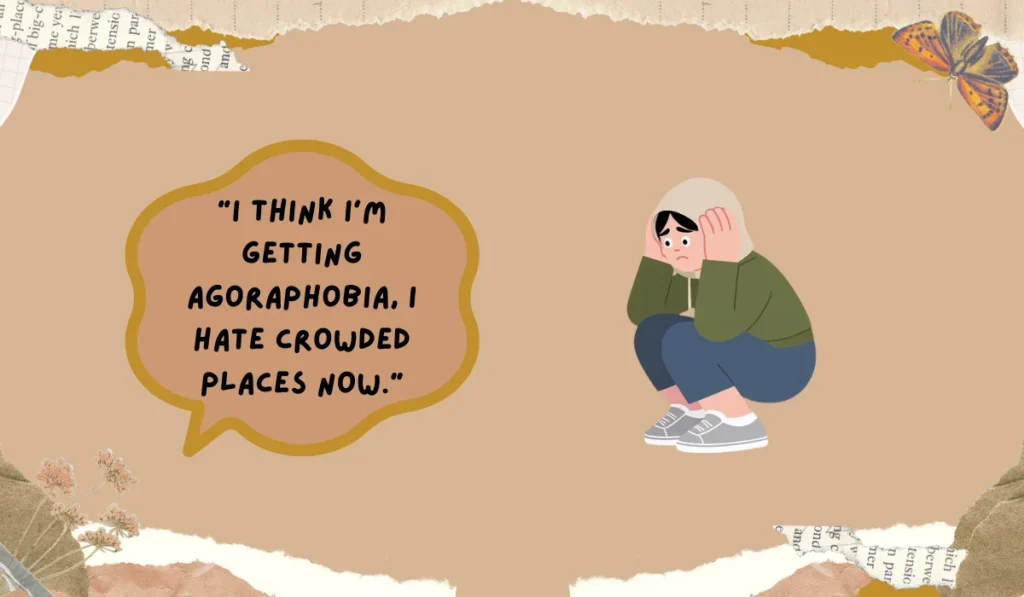
- “I think I’m getting agoraphobia, I hate crowded places now.”
- “She avoids malls completely, feels like agoraphobia.”
- “After my panic attack, I’ve been super agoraphobic lately.”
⚠️ Important note: In casual texting, people sometimes misuse the term for normal discomfort, but clinically it is more serious.
Common Misunderstandings About Agoraphobia
Many people confuse agoraphobia with other conditions.
Mistakes include:
- Thinking it means fear of open spaces only
- Confusing it with introversion
- Assuming it is just social anxiety
- Using it casually for “not liking crowds”
Reality:
- It is linked with panic disorder in many cases
- It involves avoidance behavior, not just dislike
- It can restrict mobility and independence
Causes of Agoraphobia
There is no single cause. It usually develops due to a combination of factors:
- Genetics (family history of anxiety)
- Past panic attacks
- Stressful life events
- Trauma or emotional shock
- Brain’s fear response overactivity
Related Terms & Similar Conditions
If you are researching agoraphobia meaning, you may also come across:
- Panic Disorder
- Generalized Anxiety Disorder (GAD)
- Social Anxiety
- Claustrophobia (fear of enclosed spaces)
- Panic Attacks
These conditions often overlap but are not identical.
FAQs
1. Is agoraphobia a fear of open spaces?
Not exactly. It is more about fear of situations where escape feels difficult, not just open areas.
2. Can agoraphobia be cured?
Yes, with therapy, medication, and support, many people improve significantly.
3. Is agoraphobia a mental illness?
Yes, it is a recognized anxiety disorder.
4. What triggers agoraphobia?
Panic attacks, trauma, stress, or anxiety-related experiences.
5. Can someone live normally with agoraphobia?
Yes, with treatment and coping strategies, many people manage it effectively.
Conclusion
The agoraphobia meaning goes far beyond a simple “fear of open spaces.”
It is a complex anxiety disorder that can affect how a person experiences everyday life, especially in public or unfamiliar environments.
Understanding it correctly helps reduce stigma and encourages better awareness of mental health issues.
In this 2026 guide, we explored its definition, symptoms, causes, and real world examples to make it easy to understand and apply in real conversations or research.
If you found this helpful, share your favorite text or psychology related term in the comments and keep exploring mental health topics for better awareness and understanding.