Understanding the concurrent meaning is essential in today’s fast paced digital and professional world, especially where communication, technology, and multitasking dominate daily life.
The term concurrent is widely used in different contexts ranging from computer science and legal systems to everyday conversation yet many people still confuse it with similar words like simultaneous or parallel.
In simple terms, “concurrent meaning” refers to events, actions, or processes happening at the same time or overlapping within the same timeframe.
Updated for 2026 communication trends, this concept is becoming even more important as remote work, cloud computing, and multitasking environments continue to grow.
This guide breaks everything down in a simple, human-friendly way with real examples, usage tips, FAQs, and common mistakes so you can fully master the concept.
What Does “Concurrent Meaning” Mean? (Definition & Origin)
The term concurrent meaning comes from the adjective concurrent, which originates from Latin concurrere, meaning “to run together.”
Simple Definition
Concurrent meaning refers to:
- Things happening at the same time
- Processes or events overlapping in time
- Actions that occur simultaneously or in parallel (depending on context)
Core Idea
At its heart, concurrency is about time overlap, not necessarily identical actions.
For example:
- Two meetings happening at 3 PM = concurrent events
- Running multiple apps on your phone = concurrent processes
Important Note
While people often confuse concurrent with simultaneous, they are not always identical:
- Simultaneous = exactly the same time
- Concurrent = overlapping time period (may not start or end together)
How to Use “Concurrent Meaning” in Texts, Writing & Chat
Even though concurrent meaning is more academic, it appears in daily communication, especially in:
- Work emails
- Technical discussions
- Academic writing
- Project management tools (like Jira, Trello)
- Legal and scheduling contexts
How to use it correctly
You can use “concurrent” when describing overlapping actions or systems.
Examples in real usage:
- “We are running concurrent tasks to finish the project faster.”
- “The system supports concurrent users without slowing down.”
- “She had concurrent meetings, so she had to reschedule one.”
Casual explanation in chat style
Even in informal messaging, people might say:
- “I’m handling 3 concurrent deadlines rn 😩”
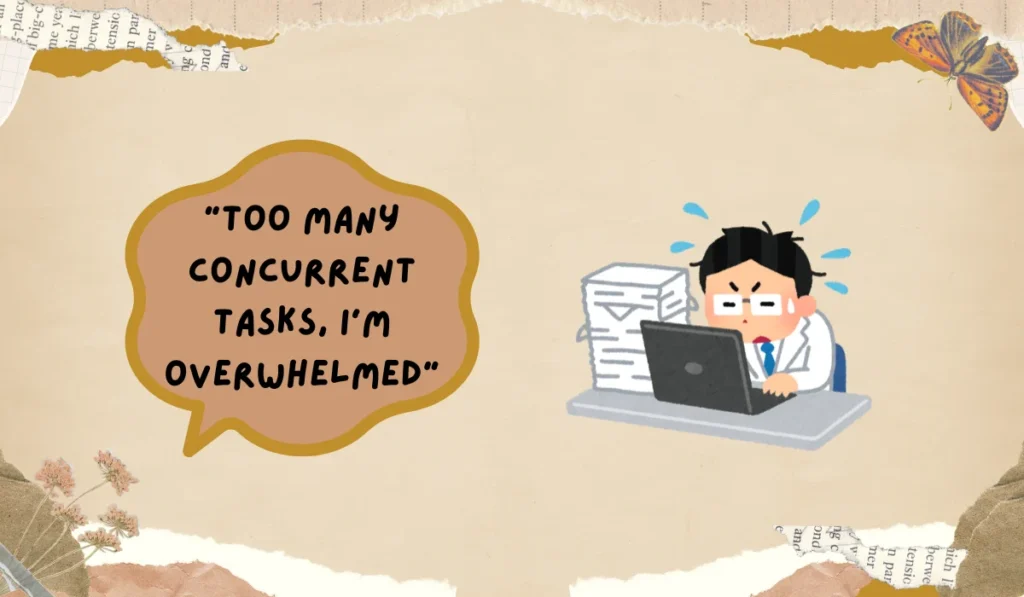
- “Too many concurrent tasks, I’m overwhelmed”
Examples of “Concurrent Meaning” in Conversations
Let’s make it super practical.
1. Workplace Chat Example
A: Can you attend both meetings?
B: No, they’re concurrent, I can only join one.
2. Tech Team Example
“We improved the system to handle 10,000 concurrent users.”
3. Daily Life Example
“I had concurrent exams this week, so I barely slept.”
4. Social Media Example
“Trying to manage concurrent life problems like a pro 💀”
These examples show how flexible the term is across formal and informal communication.
Common Mistakes or Misunderstandings
Many learners misuse or misunderstand concurrent meaning. Here are the most common mistakes:
1. Confusing concurrent with simultaneous
- ❌ Wrong: “Two tasks are concurrent because they start at the exact same second.”
- ✔ Correct: They may overlap, but exact timing isn’t required.
2. Using it for unrelated actions
- ❌ Wrong: “I ate lunch and watched TV concurrently yesterday” (casual use is okay but often unnecessary)
- ✔ Better: Use it in structured or meaningful contexts
3. Thinking it means “fast”
Concurrency is about timing overlap, not speed.
4. Overusing in casual speech
In everyday texting, simpler words like “at the same time” are often better.
Related Slangs, Synonyms & Similar Terms
To fully understand concurrent meaning, here are related terms:
1. Simultaneous
- Same exact time
- More strict than concurrent
2. Parallel
- Running side by side (often used in computing)
3. Overlapping
- Partial time intersection
4. Multitasking
- Performing multiple tasks (human-focused usage)
5. Concurrency (noun form)
- The concept of handling multiple tasks at once in systems or workflows
Why Understanding “Concurrent Meaning” Matters in 2026
In 2026, concurrency is everywhere:
- Remote work systems
- Cloud computing
- AI-driven workflows
- Online education platforms
- Gaming servers with multiple players
If you misunderstand it, you might:
- Misinterpret schedules
- Mismanage tasks
- Confuse technical documentation
- Miss deadlines in teamwork environments
Understanding this term improves both communication clarity and productivity.
FAQs
1. What is the simple meaning of concurrent?
Concurrent means two or more things happening at the same time or overlapping in time.
2. Is concurrent the same as simultaneous?
Not exactly. Simultaneous means exactly at the same time, while concurrent means overlapping in time.
3. What is concurrent usage in technology?
It refers to multiple users or processes accessing a system at the same time.
4. Can I use concurrent in daily conversation?
Yes, but it’s more common in formal, academic, or technical contexts.
5. What is an example of concurrent tasks?
Answering emails while attending a virtual meeting is an example of concurrent tasks.
6. What is concurrency in simple words?
It means doing multiple things in overlapping time periods.
Conclusion
To summarize, the concurrent meaning refers to events, actions, or processes that occur during overlapping time periods.
It is commonly used in technology, education, business, and everyday communication where multitasking or overlapping schedules are involved.
Understanding this concept helps you interpret complex information more accurately, especially in modern digital environments where multitasking and real time systems are the norm.
Share your favorite text abbreviation or confusing word in the comments.