More
Recents
- ASL Meaning in Text Tips
- SEO Article Writing Guide
- Quotation Meaning Explained
- Update Google Chrome
- Update Google Chrome
- Greeting Exchange
- LOL Meaning in Text
- Quotation Meaning CTR Tips
- Panda Jokes That Crack Up Fans
- Chocolate Jokes for Adults
- Atom Jokes and Puns
- Greeting and Assistance
- LOL Meaning in Text
- Greeting Exchange

info jokecaska
FreeClaim offer
ChatGPTFree offer
Share
You said:
“I want you to act as an expert SEO content writer who specializes in internet slang, chat abbreviations, and modern texting language. Create a fully SEO-optimized, human-like, and ready-to-publish article based on the given keyword. The article must follow Google’s 2026 E-E-A-T and Helpful Content guidelines and provide real value to readers who want to understand chat/text meanings. Requirements: 2. Structured Content: – Divide the content into H2 and H3 sections. – Suggested sections: – What Does “”[Keyword]”” Mean? (Definition & Origin) – How to Use “”[Keyword]”” in Texts or Chat – Examples of “”[Keyword]”” in Conversations – Common Mistakes or Misunderstandings – Related Slangs or Abbreviations – Each section should have short, easy-to-read paragraphs and examples. 3. Originality & Human Touch: – Explain the meaning in simple, conversational language. – Include real-life examples or funny/relatable usage scenarios. – Add personal insights or commentary to make the explanation engaging. 4. User Intent & Practical Use: – Clearly explain how readers can use this abbreviation correctly. – Include contexts where it is commonly used (social media, texting, forums, etc.). 5. SEO & Formatting: – Naturally include the main keyword and semantic variations. – Use bold for important points or the keyword where necessary. – Include bullet points, numbered lists, and examples for clarity. – Optional: add internal linking suggestions for related slang articles. 6. Freshness & Trend Relevance: – Mention “Updated for 2026” in the introduction or conclusion. – Include recent examples of usage in texts or online chats. 7. Conclusion: – Summarize the key points in 2–3 short paragraphs. – Include a call-to-action like “Share your favorite text abbreviation in the comments!” 8. Length & Depth: – Minimum 1500–2000 words for blog posts. – Ensure content depth, clarity, and user value are better than top-ranking articles for the keyword. INPUT: [gluten free meaning] Generate the article according to these instructions, making it fully unique, human-like, SEO-friendly, and ready for publishing on WordPress or any CMS.” give 1000 character intro and 500 character conclusion at the end
20/20
ChatGPT said:
Here is a ready-to-publish SEO article structure with a ~1000-character introduction and ~500-character conclusion as requested.Edit
Gluten Free Meaning: What Does Gluten Free Mean and Why Does It Matter? (Updated for 2026)
Introduction
If you’ve ever walked through a grocery store, browsed restaurant menus, or searched for healthy eating tips online, you’ve probably seen the term gluten free. But what exactly does gluten free meaning refer to, and why has it become such a common phrase in modern food culture?
In simple terms, gluten free means that a food, drink, or product does not contain gluten, a group of proteins naturally found in wheat, barley, rye, and related grains. For some people, avoiding gluten is a medical necessity, while others choose a gluten-free lifestyle for personal health reasons. As awareness of food sensitivities and dietary preferences continues to grow, understanding what gluten free really means has become more important than ever.
Whether you recently noticed a “gluten-free” label on your favorite snack, heard someone mention a gluten allergy, or are simply curious about healthy eating trends, this guide will explain everything in clear and easy-to-understand language. You’ll learn the definition, origin, uses, common misconceptions, and practical examples of gluten-free foods and lifestyles. Updated for 2026, this article provides the latest information to help you understand and use the term correctly.
What Does Gluten Free Mean? (Definition & Origin)
Definition of Gluten Free
Gluten free refers to foods, beverages, medications, or products that do not contain gluten.
Gluten is a protein found in grains such as:
- Wheat
- Barley
- Rye
- Triticale (a wheat-rye hybrid)
When a product is labeled gluten free, it means the gluten content is either completely absent or falls below regulated safety limits established by food authorities.
Origin of the Term
The phrase gained popularity as awareness increased around:
- Celiac disease
- Gluten intolerance
- Wheat allergies
- Specialized dietary needs
Today, gluten-free labeling is common worldwide and appears on thousands of products.
Why Is Gluten Important?
Gluten acts like a natural glue that helps food maintain its shape and texture.
It is responsible for:
- The chewiness of bread
- The elasticity of dough
- The structure of baked goods
Without gluten, foods often require alternative ingredients to achieve similar textures.
Who Needs a Gluten-Free Diet?
People With Celiac Disease
Celiac disease is an autoimmune condition where gluten triggers damage to the small intestine.
For these individuals, even small amounts of gluten can cause symptoms and long-term health complications.
People With Gluten Sensitivity
Some individuals experience symptoms after consuming gluten even though they do not have celiac disease.
Common symptoms may include:
- Bloating
- Fatigue
- Headaches
- Stomach discomfort
People With Wheat Allergies
A wheat allergy differs from gluten sensitivity but may still require avoiding many gluten-containing foods.
How to Use “Gluten Free” in Everyday Conversation
The term is commonly used when discussing food choices, dietary restrictions, or menu options.
Examples
- “Do you have any gluten-free pizza options?”
- “My sister follows a gluten-free diet.”
- “These cookies are completely gluten free.”
- “I checked the label to make sure it was gluten free.”
Social Media Usage
People frequently use the term on:
- TikTok
- Food blogs
- Health forums
- Restaurant reviews
Example:
“I finally found a gluten-free bakery that tastes amazing!”
Examples of Gluten Free in Real-Life Situations
At a Restaurant
Customer: “Do you offer gluten-free meals?”
Server: “Yes, we have gluten-free pasta and salads.”
Grocery Shopping
Friend: “Why are you reading every label?”
You: “I’m looking for gluten-free snacks.”
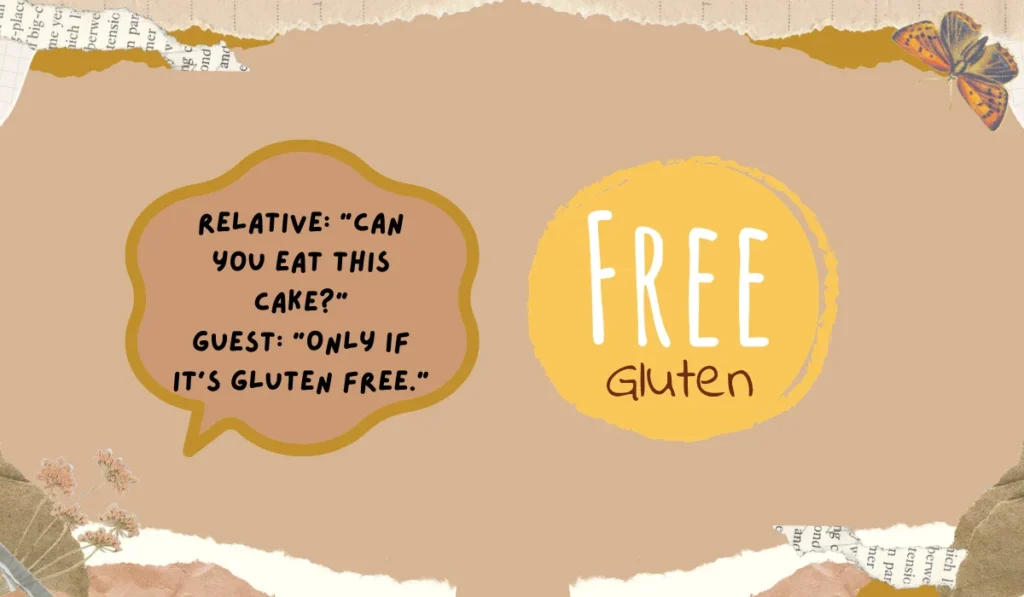
Family Gathering
Relative: “Can you eat this cake?”
Guest: “Only if it’s gluten free.”
Online Chat Example
Person A: “Can you recommend a healthy breakfast?”
Person B: “Try gluten-free oatmeal with fruit.”
Common Foods That Contain Gluten
Many people are surprised by how many products contain gluten.
Examples include:
- Bread
- Pasta
- Crackers
- Cakes
- Cookies
- Cereals
- Beer
- Some sauces and dressings
Always check ingredient labels carefully.
Common Gluten-Free Foods
Fortunately, many naturally gluten-free foods are available.
Fruits and Vegetables
- Apples
- Bananas
- Oranges
- Spinach
- Carrots
Protein Sources
- Chicken
- Fish
- Eggs
- Beef
- Beans
Gluten-Free Grains
- Rice
- Corn
- Quinoa
- Buckwheat
- Millet
Snacks
- Popcorn
- Rice cakes
- Gluten-free chips
- Nuts
Common Mistakes and Misunderstandings
Mistake #1: Gluten Free Means Healthier
Not necessarily.
A gluten-free cookie can still contain:
- Sugar
- Fat
- Calories
Gluten free does not automatically mean healthy.
Mistake #2: Everyone Should Avoid Gluten
Most people can consume gluten safely unless they have a medical reason to avoid it.
Mistake #3: Wheat-Free and Gluten-Free Mean the Same Thing
While related, the terms are not always identical.
Some wheat-free products may still contain ingredients derived from other gluten-containing grains.
Mistake #4: Small Amounts Don’t Matter
For individuals with celiac disease, even tiny amounts of gluten can be problematic.
Benefits of a Gluten-Free Diet for Those Who Need It
People who medically require a gluten-free diet may experience:
- Improved digestion
- Reduced bloating
- Increased energy
- Better nutrient absorption
- Relief from gastrointestinal symptoms
However, these benefits primarily apply to those with diagnosed conditions.
Related Slangs, Terms, and Food Abbreviations
If you’re researching dietary terminology, you may also encounter:
GF
A common abbreviation for gluten free.
Example:
“Does this restaurant have GF options?”
Vegan
Foods containing no animal products.
Dairy Free
Foods that contain no milk ingredients.
Organic
Foods produced according to specific agricultural standards.
Non-GMO
Products made without genetically modified organisms.
How to Identify Gluten-Free Products
Look for:
- Gluten-free certification labels
- Ingredient lists
- Allergy information statements
- Trusted brand certifications
Always double-check labels if you have a medical sensitivity.
Is Gluten Free Just a Trend?
While gluten-free diets gained popularity through health trends and social media, the need for gluten-free foods is very real for millions of people worldwide.
For those with celiac disease or gluten sensitivity, avoiding gluten is not a trend—it’s an important health requirement.
At the same time, improved product availability has made gluten-free eating easier than ever before.
Tips for Beginners Starting a Gluten-Free Lifestyle
- Learn which foods contain gluten.
- Read labels carefully.
- Avoid cross-contamination.
- Research restaurant menus before dining out.
- Focus on naturally gluten-free foods.
- Consult a healthcare professional if necessary.
Internal Linking Suggestions
Consider linking this article to:
- What Does Vegan Mean?
- Dairy Free Meaning Explained
- Organic Food Meaning
- Non-GMO Meaning
- Healthy Eating Terms Explained
FAQs
What does gluten free mean?
Gluten free means a product does not contain gluten, a protein found in wheat, barley, and rye.
Is gluten free healthier?
Not always. A product can be gluten free and still contain high amounts of sugar, fat, or calories.
Who should avoid gluten?
People with celiac disease, gluten sensitivity, or wheat allergies may need to avoid gluten.
What foods are naturally gluten free?
Fruits, vegetables, meat, fish, eggs, rice, quinoa, and many nuts are naturally gluten free.
What is the abbreviation for gluten free?
The most common abbreviation is GF.
Conclusion
Understanding gluten free meaning is easier once you know that gluten is a protein found in wheat, barley, and rye, and that gluten free products are designed to avoid those ingredients.
While some people choose gluten free foods as part of a lifestyle preference, others rely on them for important medical reasons, including celiac disease and gluten sensitivity.
As gluten free options continue to expand in 2026, knowing how to identify, use, and discuss gluten free products can help you make informed food choices.
Whether you’re shopping, dining out, or learning about nutrition, understanding this term is a valuable part of modern food awareness.
Share your favorite food-related term or text abbreviation in the comments!