Understanding the authoritarian meaning is more important than ever in 2026, especially as discussions about politics, leadership styles, social media debates, and even workplace culture continue to grow online.
The term is widely used in news articles, comment sections, classrooms, and everyday conversations but many people still confuse it with similar concepts like dictatorship or strict parenting.
In simple terms, authoritarian describes a system, person, or behavior that demands strict obedience and limits personal freedom.
But there’s more depth to it than just “being strict.”
In modern discussions, especially on social media platforms like X (Twitter), TikTok, Reddit, and Facebook, the word is often used to describe leaders, governments, or even influencers who enforce rules without allowing much input or disagreement.
This guide breaks down the authoritarian meaning in a clear, beginner friendly way.
What Does Authoritarian Meaning Actually Mean?
Definition of Authoritarian
The authoritarian meaning refers to a style of governance, leadership, or behavior where authority is concentrated in one person or a small group. In such systems, obedience is expected, and personal freedoms are often limited.
In simple words:
Authoritarian = strict control + limited freedom + top-down decisions
It is commonly used in:
- Politics (government systems)
- Workplace leadership styles
- Parenting styles
- School discipline systems
- Online discussions about power and control
Origin of the Term
The word “authoritarian” comes from “authority,” meaning power or control. It became widely used in political science during the 20th century, especially when analyzing governments that controlled citizens tightly without democratic participation.
Authoritarian Meaning in Modern Context (2026 Usage)
Today, the word is not limited to politics. In 2026, people use authoritarian meaning in everyday conversations, especially online.
Common modern uses include:
- “That manager is so authoritarian” (strict workplace boss)
- “This app feels authoritarian with its rules” (digital control systems)
- “The school has an authoritarian approach” (strict discipline policies)
Even though it’s a formal term, it has become part of casual internet language when describing control-heavy environments.
How to Use Authoritarian in Texts or Conversations
Correct Usage in Sentences
You can use authoritarian to describe a person, system, or behavior that is overly controlling.
Examples:
- The principal has an authoritarian leadership style.
- Many students dislike the school’s authoritarian rules.
- The government was criticized for its authoritarian policies.
Tone Matters
Be careful with tone:
- It is often critical or negative
- Rarely used as praise
- Common in debates or analysis
Examples of Authoritarian Meaning in Real Conversations
1. Social Media Discussion
User A: “Why are all comments getting deleted?”
User B: “This platform is becoming authoritarian lately.”
2. Workplace Chat
Employee: “We can’t even suggest new ideas anymore.”
Colleague: “Yeah, the management is pretty authoritarian.”
3. School Environment
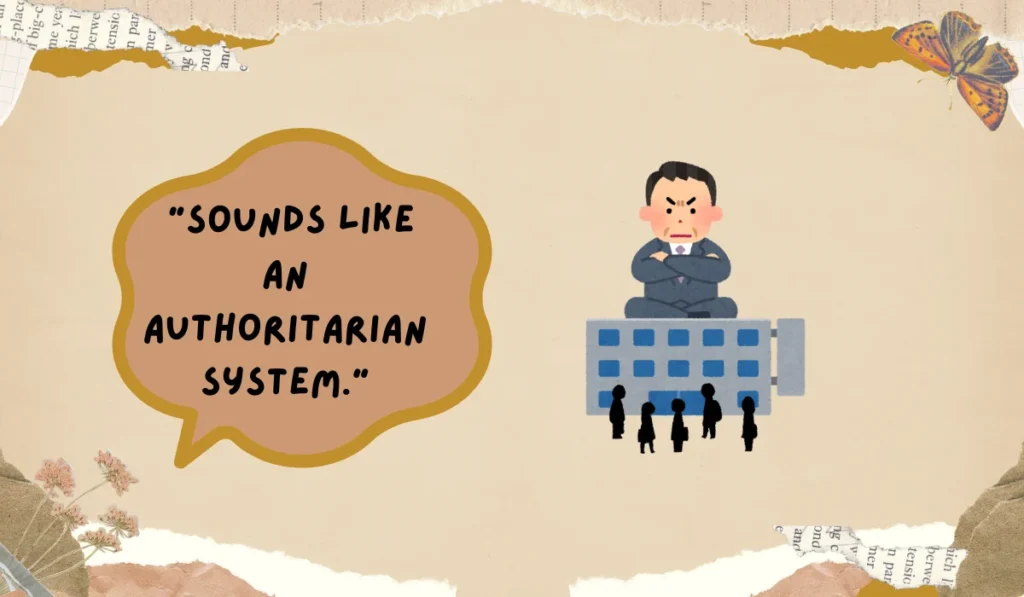
Student: “No phones, no talking, no freedom at all.”
Friend: “Sounds like an authoritarian system.”
Common Mistakes or Misunderstandings
1. Confusing Authoritarian with Dictatorship
While both involve control, they are not identical:
- Authoritarian = strict control but may still have some institutions
- Dictatorship = one leader with absolute power
2. Thinking It Means “Strict but Fair”
Authoritarian systems are often strict, but fairness is not guaranteed. The focus is control, not balance.
3. Using It in Casual Positive Contexts
It is rarely used positively. Saying “authoritarian teacher is great” may sound unusual unless sarcasm is intended.
Related Terms and Similar Words
Understanding authoritarian meaning becomes easier when you compare it with related terms:
1. Totalitarian
A more extreme system where the government controls nearly every aspect of life.
2. Democratic
Opposite of authoritarian—focuses on freedom and public participation.
3. Autocratic
Rule by one person, similar but slightly broader than authoritarian.
4. Strict
Less political, more general; often used in parenting or rules.
Authoritarian Meaning in Digital Age (Internet & 2026 Trends)
In 2026, the term is frequently used in online debates about:
- Social media censorship
- AI content moderation
- Workplace surveillance tools
- Government digital policies
For example:
- “This app’s moderation feels authoritarian.”
- “Too many restrictions—very authoritarian approach.”
It has become a powerful word in online arguments because it expresses concerns about control and freedom.
Why Understanding Authoritarian Meaning Matters
Knowing this term helps you:
- Understand news and political discussions
- Interpret social media debates correctly
- Improve academic writing and essays
- Communicate clearly in professional environments
It is especially useful in subjects like political science, sociology, and communication studies.
FAQs
What is the simple meaning of authoritarian?
It means a system or person that demands strict obedience and limits freedom of choice.
Is authoritarian always negative?
Mostly yes, it is used critically, but in rare cases it may describe effective control systems.
What is the difference between authoritarian and democratic?
Authoritarian systems limit participation and freedom, while democratic systems encourage public involvement and choice.
Can a parent be authoritarian?
Yes, in parenting styles, authoritarian parents enforce strict rules with little flexibility or discussion.
Is authoritarian the same as dictatorship?
Not exactly. Dictatorship is usually more extreme, with complete control by one ruler, while authoritarian systems may still have institutions.
Conclusion
The authoritarian meaning revolves around control, authority, and limited freedom.
Whether used in politics, workplaces, or online discussions, it describes systems or behaviors where decisions are made from the top with little input from others.
In 2026, the term has become even more relevant due to digital governance, workplace systems, and online moderation debates.
Understanding it helps you better interpret news, conversations, and social commentary in a rapidly changing world.
Share your favorite slang or political term in the comments.