Understanding the dismembered meaning is important for anyone trying to improve their English vocabulary, read online content accurately, or avoid confusion when encountering strong or unusual words in texts, social media posts, or storytelling discussions.
While many people mistakenly search for it as a modern chat slang or texting abbreviation, the truth is that “dismembered” is not internet slang at all it is a literal English word with a very serious meaning.
In simple terms, “dismembered” refers to the act of cutting, tearing, or separating a body into pieces, usually arms, legs, or other parts.
It is commonly used in crime reports, horror stories, medical/legal contexts, and fictional narratives.
Because of its intense imagery, the word often appears in movies, true crime discussions, video game lore, and dark storytelling communities online.
What Does “Dismembered Meaning” Mean? (Definition & Origin)
The keyword dismembered meaning refers to understanding the definition of the word dismembered.
Definition
Dismembered means:
- To cut, tear, or separate limbs or body parts from a body
- To divide something into smaller parts in a violent or forceful way
Simple Explanation
If something is “dismembered,” it has been taken apart—usually in a physical and violent sense. For example:
- A body being cut into parts in a crime scene (literal usage)
- In storytelling, a monster dismembering a victim (fictional usage)
- Sometimes used metaphorically for breaking something apart completely
Origin of the Word
The word comes from:
- “dis-” meaning “apart”
- “member” meaning “limb or part of a body”
So literally, it means “to remove the limbs.”
Historically, the term has been used in legal, medical, and literary texts for centuries. It is not modern internet slang, and it is not an abbreviation used in texting culture.
How “Dismembered” Is Used in Texts, Stories & Online Content
Although dismembered meaning is often searched in the context of chat language, it is important to clarify: it is NOT a texting abbreviation like LOL or BRB.
However, it does appear in online spaces in specific ways:
1. Horror and Fiction Communities
- Used in storytelling, creepypasta, horror games, and movies
- Example: describing a villain or monster
2. News & Crime Reports
- Used in serious reporting about violent crimes
- Found in headlines or forensic descriptions
3. Gaming Contexts
- Sometimes appears in violent video games or lore descriptions
- Used metaphorically in gameplay narratives
4. Figurative Usage
Occasionally used outside literal meaning:
- “The argument completely dismembered his point” (metaphorical breakdown)
Examples of “Dismembered” in Conversations & Context
To fully understand the dismembered meaning, here are simple examples:
Literal Usage Examples
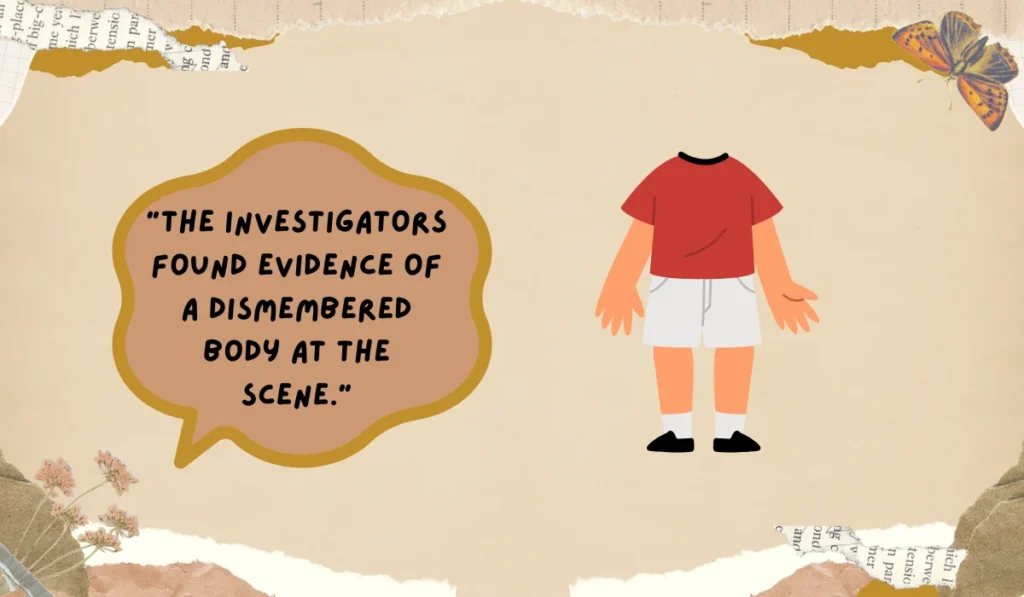
- “The investigators found evidence of a dismembered body at the scene.”
- “The horror movie showed a dismembered creature attacking the village.”
Fictional/Storytelling Examples
- “In the game’s storyline, the monster dismembered every enemy it faced.”
- “The villain was known for leaving dismembered remains in the forest.”
Metaphorical Usage (Less Common)
- “The editor dismembered the article into smaller sections for clarity.”
- “Her argument was completely dismembered during the debate.”
Social Media Context (Rare)
On platforms like Reddit or X (Twitter), it might appear in:
- True crime discussions
- Horror fandom threads
- Movie breakdown posts
Common Mistakes or Misunderstandings
Many people misunderstand the dismembered meaning because of its strong imagery.
1. Thinking It Is Slang
❌ Wrong assumption: “dismembered” is internet slang
✔ Reality: It is a formal English word, not chat abbreviation
2. Confusing It With “Disremembered”
Some users mistakenly think it relates to memory loss. It does NOT.
3. Using It in Casual Conversation
It is not suitable for everyday casual texting:
- Saying “I dismembered my homework” would sound confusing or inappropriate
4. Overusing in Non-Serious Contexts
Because of its violent tone, using it casually can sound dramatic or alarming.
Related Words, Slang & Semantic Variations
While dismembered meaning is not slang, here are related terms:
Related Words
- Dismember
- Severed
- Mutilated
- Torn apart
- Fragmented (non-violent version)
Similar but Softer Alternatives
If you want a non-violent expression:
- Broken apart
- Divided
- Separated
- Cut into pieces
Internet Context Variations
In online discussions, people may replace it with:
- “ripped apart” (informal)
- “destroyed” (metaphorical slang in debates or gaming)
FAQs
1. What does dismembered mean in simple words?
It means something (usually a body or object) has been cut or torn into parts.
2. Is dismembered a slang or abbreviation?
No, it is not slang or a texting abbreviation. It is a formal English word.
3. Where is the word dismembered commonly used?
It is used in:
- Crime reports
- Horror stories
- Movies and video games
- Literary descriptions
4. Can dismembered be used in casual texting?
Not really. It is too strong and formal for everyday chat.
5. What is the difference between dismembered and severed?
- Dismembered: entire body or structure is cut into multiple parts
- Severed: only one part is cut off
6. Is dismembered always related to violence?
Mostly yes in literal usage, but it can sometimes be used metaphorically.
Conclusion
The dismembered meaning is straightforward but often misunderstood online.
It refers to something being violently or completely cut into parts, most commonly used in crime reporting, horror fiction, and serious story telling contexts.
“Dismembered” belongs firmly in standard English, with strong literal and occasionally metaphorical usage.
What’s your most confusing word from texts or social media?
Share it and keep exploring language with curiosity!